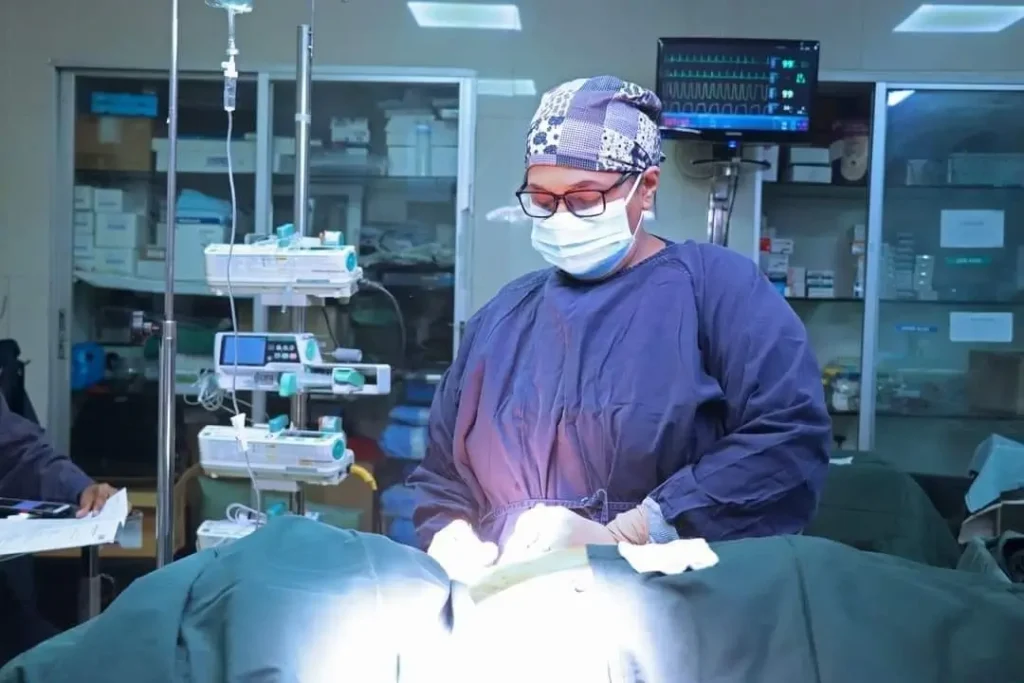
Reconstructive surgery restores form, function, and quality of life after trauma, disease, congenital defects, or burns. Led by Professor Dr. Foara Tasmim — Professor of Plastic Surgery at the National Institute of Burn & Plastic Surgery (NIBPS) with 20+ years experience and 20,000+ procedures — this service offers evidence-based, microsurgical, and patient-centered reconstruction for the most complex problems.
What is Reconstructive Surgery?
Reconstructive surgery is a medically necessary branch of plastic surgery focused on repairing structural defects and restoring function. Unlike purely cosmetic procedures, reconstructive operations treat conditions that impair breathing, eating, mobility, sensation, or cause severe psychological distress. The goal is durable restoration: anatomically, functionally, and cosmetically.
Primary objectives:
- Restore anatomy and physiological function
- Minimise long-term disability and pain
- Achieve the best possible cosmetic outcome within medical constraints
Common Indications (When to Consult)
- Post-burn deformities and contractures (neck, hands, joints)
- Traumatic injuries: soft-tissue loss, machine/industrial trauma, road accidents
- Oncologic defects after tumor excision (skin cancers, head & neck resections, breast cancer)
- Congenital deformities: cleft lip/palate, ear deformities, syndactyly, limb anomalies
- Chronic non-healing wounds: diabetic foot ulcers, pressure sores
- Hand injuries and complex tendon/nerve injuries
- Scar deformities limiting function (adhesions, restrictive scars)
- Revision surgeries after failed reconstructions
Advanced Reconstructive Services Offered
- Microsurgery & Free Flap Reconstruction
- Free tissue transfer (fibula, radial forearm, anterolateral thigh flap) for large composite defects.
- Microsurgical vessel anastomosis to revascularize transferred tissue.
- Indicated for head & neck, extremity, and major chest wall reconstructions.
- Pedicled & Local Flap Reconstruction
- Local flap coverage for moderate defects: advancement, rotation, transposition flaps.
- Pedicled flaps for regional coverage when microsurgery isn’t indicated.
- Skin Grafting (STSG / FTSG)
- Split-thickness and full-thickness grafting for wound coverage, post-excision defects, and burn wounds.
- Breast Reconstruction
- Immediate or delayed reconstruction post-mastectomy using implants or autologous tissue (TRAM, DIEP, latissimus dorsi flaps).
- Nipple-areola reconstruction and symmetry procedures.
- Post-Burn Contracture Release & Functional Restoration
- Z-plasties, serial excision, flap reconstruction, and postoperative physiotherapy for restoration of range of motion.
- Hand & Microsurgical Reconstruction
- Tendon repair, nerve repair and grafting, digital replantation, complex soft-tissue coverage for hand injuries.
- Oncologic Reconstruction (Head & Neck, Skin Cancer)
- Reconstruction after tumor excision to preserve speech, swallowing, airway, and facial symmetry.
- Chronic Wound Management & Limb Salvage
- Debridement, vascularized tissue coverage, and multidisciplinary care for diabetic foot and pressure ulcers.
- Scar Revision & Functional Scar Correction
- Surgical scar excision, flaps, tissue expansion, and postoperative therapies (silicone, laser recommendations).
The Reconstructive Patient Journey (What Patients Can Expect)
- Initial Consultation & Assessment
- Comprehensive history, physical exam, functional assessment and photographs.
- Review of prior operations, imaging (CT/MRI/angiography) and multidisciplinary planning.
- Surgical Planning & Informed Consent
- Discussion of reconstructive options (pros/cons), expected functional outcomes, and recovery timeline.
- Preoperative optimization: nutrition, glycemic control, smoking cessation.
- Operation
- Performed in an accredited hospital setting with trained anesthesia and perioperative teams.
- Use of microsurgical instruments, intraoperative monitoring, and sterile technique.
- Postoperative Care & Rehabilitation
- ICU/ward monitoring for flap perfusion, pain control, antibiotics as needed.
- Early physiotherapy, occupational therapy, and wound care.
- Scar management and staged secondary procedures where indicated.
- Long-Term Follow Up
- Functional outcome tracking, cosmetic refinement, and psychosocial support.
Patient reassurance: Reconstruction prioritizes function first, then appearance. Outcomes improve significantly with multidisciplinary care and patient adherence to rehab.
Benefits & Outcomes
- Restored mobility and limb function
- Preserved or improved speech, swallowing, and breathing (head & neck)
- Improved ability to perform daily activities and return to work
- Reduced chronic pain and infection risk
- Enhanced psychological wellbeing and social reintegration
Evidence of competence: Prof. Dr. Foara Tasmim’s 20,000+ surgical cases and academic leadership at NIBPS underpin high success rates in complex reconstructions.
Risks & How We Minimize Them
Common risks: infection, flap failure, partial graft loss, bleeding, anesthesia complications, need for revision surgery.
Risk mitigation strategies: preoperative optimization, sterile technique, experienced microsurgical team, intraoperative monitoring, prompt intervention for compromised flaps, structured rehabilitation.
Why Choose Professor Dr. Foara Tasmim for Reconstructive Surgery?
- 20+ years of focused reconstructive and burn expertise managing complex and high-risk cases.
- Academic leadership at NIBPS — training future surgeons and applying latest evidence.
- Microsurgical proficiency for limb salvage and head & neck reconstructions.
- Proven volume: 20,000+ successful procedures across reconstructive and burn care.
- Patient-centred planning: clear communication, realistic expectations, and long-term support.
Frequently Asked Questions
How long is recovery after major reconstructive surgery?
Recovery varies by procedure—microsurgical free flap patients typically stay in hospital 5–10 days with follow-up over months; hand surgeries may require weeks of therapy. Your surgeon will provide a personalized timeline.
Is reconstructive surgery covered by insurance?
Many medically necessary reconstructive procedures are covered; elective components may not be. We provide documentation to assist with insurance claims.
Can post-burn deformities be fully corrected?
Many functional and aesthetic improvements are achievable; some cases require staged surgeries. The aim is maximum function and an acceptable cosmetic result.
Will I need physiotherapy?
Yes—early and sustained rehabilitation is essential to restore function and prevent contractures.
Is microsurgery available in Dhaka?
Yes. Professor Dr. Foara Tasmim performs microsurgical reconstructions and coordinates with specialized perioperative teams.
Local Logistics & How to Book
Locations: National Institute of Burn & Plastic Surgery (NIBPS), Dhaka; Visiting Consultant at Labaid Specialized Hospital, Dhanmondi.
To book: [Book Appointment] — (link/button on clinic page). Walk-in assessments available for urgent trauma.